




































NEFCISA
NEFCISA

The Music In Africa Foundation (MIAF) is proud of its partnership with the Industrial Development Corporation (IDC) as a Strategic Implementing Partner (SIP) for its Social Employment Fund (SEF). Through this collaboration, MIAF is running a national programme that is creating jobs, addressing skills gaps, and strengthening South Africa's creative industries — in line with the SEF's overarching goal to generate work for the common good and build community value through employment, social contribution, and inclusive economic participation. Operating under the banner NEFCISA (National Employment Facility for Creative Industries in South Africa), the initiative is recruiting and training participants, matching them with host organisations, and has already placed 1 500 workers across the country — surpassing its original target of 1 000. NEFCISA is delivered through a network of 20 host organisations spanning five provinces, who are actively hosting participants and contributing to work for the common good across South Africa's creative and cultural industries. Key Objectives: Support employment and entrepreneurship in the creative industries. Offer skills development and training programmes. Foster partnerships between public and private creative sectors. Promote South African creativity at both provincial and national levels Foster community development through social contribution.

ACCES
ACCES

ACCES Conference and Showcase Festival is Africa's leading music industry gathering, bringing together the people shaping the future of the continent's music business. Artists, entrepreneurs, executives, investors, policymakers and cultural leaders from across Africa and around the world come to ACCES to build partnerships, exchange ideas, discover talent and create new business opportunities. Since its launch in 2017, ACCES has become the continent's premier platform for professional exchange and music market development. Combining a high-level conference with a curated showcase festival, networking, exhibitions and industry programmes, ACCES offers a unique space where creativity meets business and where African music connects with the global industry.

Gender@Work
Gender@Work

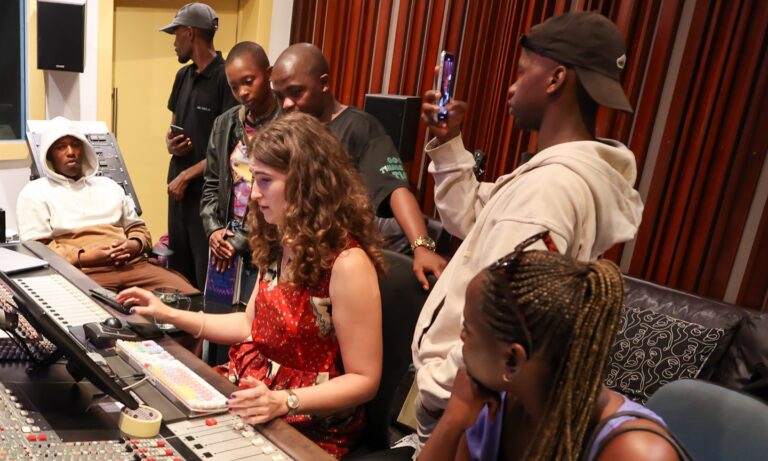
Music In Africa Gender @ Work is a three-year training programme aimed at upskilling and increasing the participation of female professionals in the African music sector. Launched by the Music In Africa Foundation (MIAF) in April 2019, the programme is connected to the MIAF’s ACCES music conference – a pan-African event held in a different African country every year. This connection enables the programme to reach new participants in a different African country every year. The programme marks the beginning of a more concerted effort by the Foundation to support the participation and inclusion of women in all facets of its programmes and the music sector in Africa as a whole. Over the three years, the programme will aim to address gender imbalances in the sector through training, lobbying, facilitating knowledge exchange and dialogues that foster the interest of women. The broader objectives of the programme are to: Provide industry training for women on critical music industry skills, focusing on: Stage management Electronic music production and recording Music business management Technical knowledge Provide an opportunity for both professional and aspiring women to benefit from the Music In Africa network and its broad range of activities in 2019, 2020 and 2021. Provide a solution-based platform in the form of a round table at ACCES with a view to identify challenges, discuss opportunities and lobby for the interests of female practitioners. Offer participants the opportunity to benefit from programmes offered by MIAF’s partners. Increase access to educational materials. Integrate participants in the broader ACCES programme to maximise experience and exposure to the industry. Record and present training materials on the www.musicinafrica.net, including but not limited to tutorials, templates and other best-practice materials. Communicate women-based themes that support the initiatives and messages of the programme. MAIN TRAINING ACTIVITIES Training in first country (Ghana): In the first year, participants will be trained on all aspects of stage management by a team of experienced stage managers from 10 to 17 November 2019. The programme will offer robust classroom training as well as practical, hands-on training in which participants will also be given the opportunity to manage various aspects of the ACCES performance programme. Training in second country: The second training iteration will take place at ACCES 2020 when the programme will diversify its course to include music production lessons and training on other music business topics. A round-table platform will also be introduced to coincide with the ACCES programme. Training in third country: The third training iteration will take place at ACCES 2021 in a different country, offering an advanced course. HOW DO YOU GET INVOLVED?  As a participant, facilitator or trainer: The programme enrolls up to 12 trainees every year. All opportunities are advertised publicly on this website, and will be added to this page. Please keep checking this page for new calls (below under UPDATES & CURRENT OPPORTUNITIES). As a partner Please contact Claire Metais at [email protected]. APPLY The call for applications for 2020 will be announced soon. The Music In Africa Gender @ Work programme is made possible with the support of the Prince Claus Fund, Siemens Stiftung and Goethe-Institut.

Sound Connects Fund
Sound Connects Fund

For cultural and creative practitioners and organisations operating in southern Africa, access to funding remains a major challenge. The COVID-19 pandemic has also had a massive impact on government policy, spending and the economy in general, and has seen spending on culture being moved further down the list of priorities. Further, the cultural and creative industries repeatedly cite four main areas where investment is needed for growth, which are increased visibility, mobility including access to new markets, finance and support structures.

Instrument Building And Repair Project

Experience the Vibrations African Instruments Exhibition online in 3D

News

SA: Ray Phiri loses battle with cancer

12 Jul 2017 - 13:33

cc-img flag-img

By Ano Shumba and Carlos Ncube

Legendary South African musician Ray Phiri has died. The veteran artist passed away at a Nelspruit hospital about 3.30am on Wednesday morning after losing his battle with lung cancer. He was 70.  
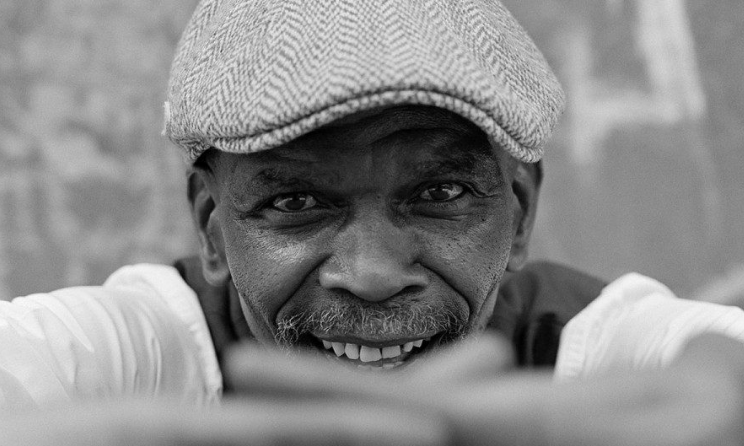
The late South African guitarist and bandleader Ray Phiri.

News about Phiri’s death comes about a week after South Africans bid farewell to veteran jazz musician and educator Dr Ramakgobotla ‘Johnny’ Mekoa, who died at his Johannesburg home on 4 July.

“Ray has been bad for the past few days,” family spokesperson Paul Nkanyane said. “I spoke to him on Monday and he was struggling but unfortunately there was nothing we could have done. The doctors say they tried all that they could to help him out."

Nkanyane said Phiri was surrounded by family and friends at the time of his death.

Phiri’s illness made headlines when his long-time colleague Richard Mitchell shared a post on social media early this week. According to Mitchell’s post, the singer had been financially unstable and in need of money. “Please help by donating funds, as he has exhausted all his private funds,” the post read. The post was then taken down after Phiri’s family became seemingly displeased that his health status had been made public.

According to local media, Mitchell’s call prompted one of Phiri’s close friends, whose name is still unknown, to start a crowdfunding initiative to support the musician. The initiative was later shut down at the request of the family and only accumulated about R3 000 of its R50 000 goal.

News about Phiri’s death flooded the internet, radio and TV on Wednesday, with South Africans from all walks of life offering their condolences.

"He was a musical giant. This is indeed a huge loss for South Africa and the music industry as a whole," President Jacob Zuma said in a statement.

The SAMRO Foundation wrote on Twitter: “We are saddened to learn of the passing of the legendary ntate [elder] Ray Phiri. All of us at SAMRO are thinking of his family and friends.”

BET Africa wrote: “What a loss! Rest in Peace, Ray Phiri. Through your music, you never missed a beat. May it live on forever.”

South African Minister of Arts and Culture Nathi Mthethwa also paid tribute to the late singer. “We are deeply saddened by the news of the passing of a jazz legend and a one-of-a-kind musician, ntate Ray Phiri,” he wrote on Twitter.

Phiri was billed to perform at the Rocking the Daisies festival later this year. “We will host a tribute to Ray at this year’s Rocking the Daisies as a celebration of his life and recognition to his contribution to the music industry,” the organisers of the Western Cape festival said.

Born on 23 March 1947, Phiri began his musical career with Jabuva Queens in the late 1960s before co-founding instrumental band the Cannibals. Phiri then started Stimela, a group that helped him earn gold- and platinum-selling albums such as Fire, Passion and Ecstasy (1991), Look, Listen and Decide (1992) and People Don't Talk So Let's Talk.

In the mid-1980s Phiri collaborated with US musician Paul Simon on the Graceland album and tour, a bittersweet memory for the South African guitarist. “Graceland is a place of pain,” Phiri told Music In Africa during his final interview before being hospitalised. “Too many controversies, too many lies, too many shenanigans. The truth will come out someday.”

With a music career spanning more than five decades, Phiri’s musical genius captured the hearts of many South Africans. Even younger generations of South Africans have been exposed to Phiri’s music through songs such as rapper Young Nations’ rendition of ‘Zwakala’, which was also used as the theme song for the popular South African TV series Zone 14.

Phiri was given the Lifetime Achievement Award at the South African Music Awards (SAMAs) in 2012. He was also awarded the Order of Ikhamanga in Silver for his contribution to music in South Africa.

Please log in to post a comment.

Most popular

Disclaimer: Music In Africa provides a platform for musicians and contributors to embed music and videos solely for promotional purposes. If any track or video embedded on this platform violates any copyrights please inform us immediately and we will take it down. Please read our Terms of Use for more.

newsletter banner

Subscribe to our monthly Newsletter

Follow us on social media