



































NEFCISA
NEFCISA

The Music In Africa Foundation (MIAF) is proud to announce its partnership with the Industrial Development Corporation (IDC) as a Strategic Implementing Partner (SIP) for its Social Employment Fund (SEF). Through this collaboration, MIAF is launching a new national programme designed to create jobs, address skills gaps, and strengthen South Africa’s creative industries — in line with the SEF’s overarching goal to generate work for the common good and build community value through employment, social contribution, and inclusive economic participation. Operating under the banner NEFCISA (National Employment Facility for Creative Industries in South Africa), the initiative will recruit and train participants, match them with host organisations, and place a minimum of 1 000 workers across the country. Key Objectives: Support employment and entrepreneurship in the creative industries. Offer skills development and training programmes. Foster partnerships between public and private creative sectors. Promote South African creativity at both provincial and national levels Foster community development through social contribution.

Gender@Work
Gender@Work

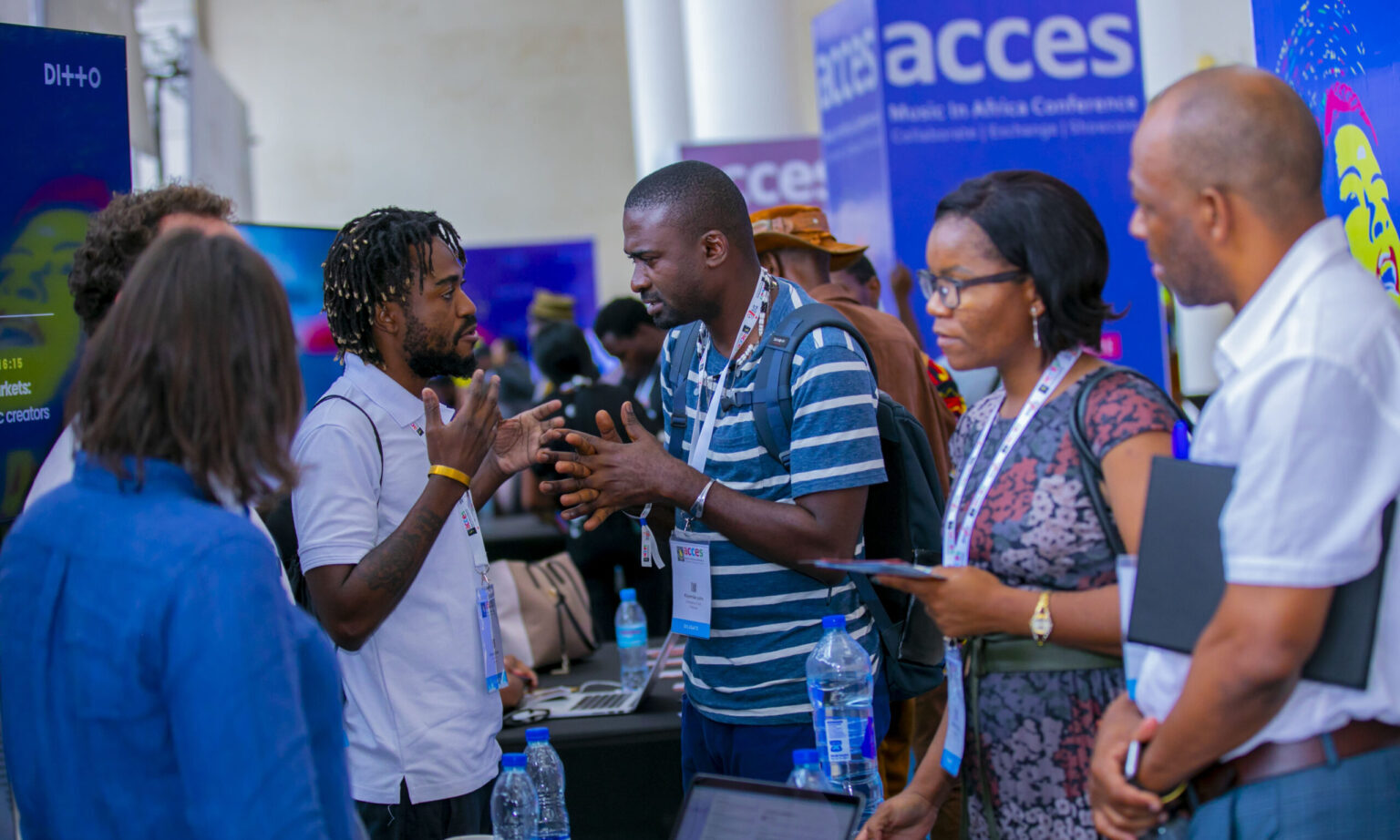
Music In Africa Gender @ Work is a three-year training programme aimed at upskilling and increasing the participation of female professionals in the African music sector. Launched by the Music In Africa Foundation (MIAF) in April 2019, the programme is connected to the MIAF’s ACCES music conference – a pan-African event held in a different African country every year. This connection enables the programme to reach new participants in a different African country every year. The programme marks the beginning of a more concerted effort by the Foundation to support the participation and inclusion of women in all facets of its programmes and the music sector in Africa as a whole. Over the three years, the programme will aim to address gender imbalances in the sector through training, lobbying, facilitating knowledge exchange and dialogues that foster the interest of women. The broader objectives of the programme are to: Provide industry training for women on critical music industry skills, focusing on: Stage management Electronic music production and recording Music business management Technical knowledge Provide an opportunity for both professional and aspiring women to benefit from the Music In Africa network and its broad range of activities in 2019, 2020 and 2021. Provide a solution-based platform in the form of a round table at ACCES with a view to identify challenges, discuss opportunities and lobby for the interests of female practitioners. Offer participants the opportunity to benefit from programmes offered by MIAF’s partners. Increase access to educational materials. Integrate participants in the broader ACCES programme to maximise experience and exposure to the industry. Record and present training materials on the www.musicinafrica.net, including but not limited to tutorials, templates and other best-practice materials. Communicate women-based themes that support the initiatives and messages of the programme. MAIN TRAINING ACTIVITIES Training in first country (Ghana): In the first year, participants will be trained on all aspects of stage management by a team of experienced stage managers from 10 to 17 November 2019. The programme will offer robust classroom training as well as practical, hands-on training in which participants will also be given the opportunity to manage various aspects of the ACCES performance programme. Training in second country: The second training iteration will take place at ACCES 2020 when the programme will diversify its course to include music production lessons and training on other music business topics. A round-table platform will also be introduced to coincide with the ACCES programme. Training in third country: The third training iteration will take place at ACCES 2021 in a different country, offering an advanced course. HOW DO YOU GET INVOLVED?  As a participant, facilitator or trainer: The programme enrolls up to 12 trainees every year. All opportunities are advertised publicly on this website, and will be added to this page. Please keep checking this page for new calls (below under UPDATES & CURRENT OPPORTUNITIES). As a partner Please contact Claire Metais at claire@musicinafrica.net. APPLY The call for applications for 2020 will be announced soon. The Music In Africa Gender @ Work programme is made possible with the support of the Prince Claus Fund, Siemens Stiftung and Goethe-Institut.

Sound Connects Fund
Sound Connects Fund

For cultural and creative practitioners and organisations operating in southern Africa, access to funding remains a major challenge. The COVID-19 pandemic has also had a massive impact on government policy, spending and the economy in general, and has seen spending on culture being moved further down the list of priorities. Further, the cultural and creative industries repeatedly cite four main areas where investment is needed for growth, which are increased visibility, mobility including access to new markets, finance and support structures.

Instrument Building And Repair Project

Experience the Vibrations African Instruments Exhibition online in 3D

Features

The story of Ghana’s favourite genre – part 4

21 Apr 2017 - 11:39

cc-img flag-img

This article continues a treatise of the hiplife genre in Ghana.

Mzbel is one of Ghana's popular hiplife artists.  Photo: Modern Ghana

Key issues facing the genre

There are queries as to why hiplife music does not receive as much airplay in Nigeria as Nigerian music gets in Ghana, and why the genre is not enjoying popularity beyond Ghanaian communities worldwide.

The quality of some of the songs, both in terms of content and production, leaves much to be desired. Ace producer Zapp Mallet bemoans the mediocrity that is so prevalent on the Ghanaian scene. For him, a continent that produced the likes of Fela Kuti, Hugh Masekela and Osibisa should not be churning out such chaff.

For some critics, the issues afflicting the industry are self-inflicted. These include aversion to the Musicians Union of Ghana (MUSIGA) which is viewed with suspicion by some hiplife artists who consider it a toothless bulldog. Other challenges include the lack of originality with many hiplife artists who simply copying beats and styles without striving for originality.

To a certain extent, it is believed that this problem stems from the fact that music is not taught at basic school level. So, apart from students who attend private schools where music is taught or who have received private lessons at home, artists have no knowledge of the rudiments of music to have a certain level of appreciation of good music. This might explain the amount of discordant music that is played all over the country, since many of the sound engineers also have no knowledge of music or how to play an instrument apart from manipulating software for the production of beats.

The solution, among other suggestions, lies in the reintroduction of music education at basic school level so that talented children can pick up the rudiments at an early age. The current crop of artists also have to appreciate their shortcomings and learn to improve their music appreciation by either learning musical instruments or taking short courses in musicianship.

For arts writer John Owoo, the way to global appeal for hiplife would be to use our local rhythms to draw attention. As he puts it, “There is no way a Ghanaian artist can play better hip hop than American hip hop stars, so definitely our music will not sell outside. That’s why our music is locked up within the system. It’s not going out, I mean, people are not buying it outside. Let me add that, things are changing: artists are now doing more quality stuff and by including a little bit of local content, we are illustrating our own indigenous resources.” Owoo also expresses concern about the fact that the top artists on the music scene today cannot play instruments.

For Okyeame Kwame, the way forward to scaling international heights is through collaborations with musicians from countries in which they would like to break into – like the work Nigerian artists are doing with American artists. It’s a question of identity and finding ourselves.

Hiplife artists, their management and the beatmakers have to scale up to make music that would appeal to generations like their predecessors did. Let’s push our Fuse ODGs, ELs, Sarkodies, Gurus, VVIPs, R2Bees and the rest to get us there. We can!


This is an excerpt from Ahuma Bosco Ocansey’s forthcoming book Conversations on the Creative Arts in Ghana. This is the fourth and last instalment of the serial.

Please log in to post a comment.

Most popular

Disclaimer: Music In Africa provides a platform for musicians and contributors to embed music and videos solely for promotional purposes. If any track or video embedded on this platform violates any copyrights please inform us immediately and we will take it down. Please read our Terms of Use for more.

newsletter banner

Subscribe to our monthly Newsletter

Follow us on social media