

































NEFCISA
NEFCISA

The Music In Africa Foundation (MIAF) is proud to announce its partnership with the Industrial Development Corporation (IDC) as a Strategic Implementing Partner (SIP) for its Social Employment Fund (SEF). Through this collaboration, MIAF is launching a new national programme designed to create jobs, address skills gaps, and strengthen South Africa’s creative industries — in line with the SEF’s overarching goal to generate work for the common good and build community value through employment, social contribution, and inclusive economic participation. Operating under the banner NEFCISA (National Employment Facility for Creative Industries in South Africa), the initiative will recruit and train participants, match them with host organisations, and place a minimum of 1 000 workers across the country. Key Objectives: Support employment and entrepreneurship in the creative industries. Offer skills development and training programmes. Foster partnerships between public and private creative sectors. Promote South African creativity at both provincial and national levels Foster community development through social contribution.

ACCES
ACCES

ACCES has stamped its authority as Africa’s leading music trade event. At the 2019 edition in Accra, the conference brought together more than 1 200 delegates from about 50 countries on the continent and beyond. The conference also hosted 76 showcasing artists from Africa and the diaspora, who got to perform for an influential audience at two top live venues in the Ghanaian capital. Apart from live showcases, the event features panel discussions, presentations, exhibitions, pitch sessions, Q&A sessions with prominent musicians and visits to key music industry hubs in the host city. Many of these activities will be planned for ACCES 2021, with the ACCES team already exploring a tailor-made programme that will cater for the specific needs of the local music industry amid the pandemic. ACCES is organised by the Music In Africa Foundation, a non-profit and pan-African organisation, in partnership with Siemens Stiftung and Goethe-Institut.

Gender@Work
Gender@Work

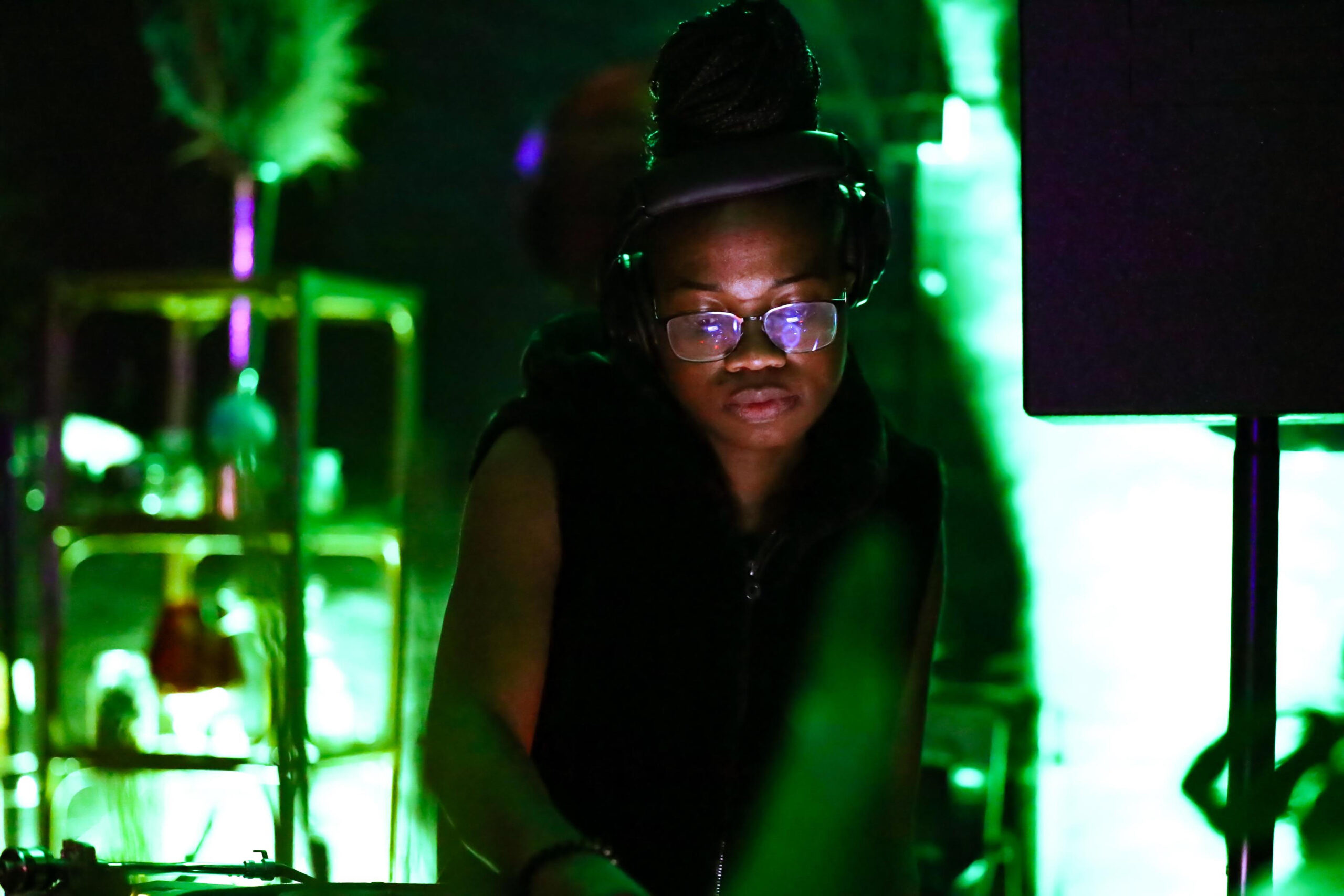
Music In Africa Gender @ Work is a three-year training programme aimed at upskilling and increasing the participation of female professionals in the African music sector. Launched by the Music In Africa Foundation (MIAF) in April 2019, the programme is connected to the MIAF’s ACCES music conference – a pan-African event held in a different African country every year. This connection enables the programme to reach new participants in a different African country every year. The programme marks the beginning of a more concerted effort by the Foundation to support the participation and inclusion of women in all facets of its programmes and the music sector in Africa as a whole. Over the three years, the programme will aim to address gender imbalances in the sector through training, lobbying, facilitating knowledge exchange and dialogues that foster the interest of women. The broader objectives of the programme are to: Provide industry training for women on critical music industry skills, focusing on: Stage management Electronic music production and recording Music business management Technical knowledge Provide an opportunity for both professional and aspiring women to benefit from the Music In Africa network and its broad range of activities in 2019, 2020 and 2021. Provide a solution-based platform in the form of a round table at ACCES with a view to identify challenges, discuss opportunities and lobby for the interests of female practitioners. Offer participants the opportunity to benefit from programmes offered by MIAF’s partners. Increase access to educational materials. Integrate participants in the broader ACCES programme to maximise experience and exposure to the industry. Record and present training materials on the www.musicinafrica.net, including but not limited to tutorials, templates and other best-practice materials. Communicate women-based themes that support the initiatives and messages of the programme. MAIN TRAINING ACTIVITIES Training in first country (Ghana): In the first year, participants will be trained on all aspects of stage management by a team of experienced stage managers from 10 to 17 November 2019. The programme will offer robust classroom training as well as practical, hands-on training in which participants will also be given the opportunity to manage various aspects of the ACCES performance programme. Training in second country: The second training iteration will take place at ACCES 2020 when the programme will diversify its course to include music production lessons and training on other music business topics. A round-table platform will also be introduced to coincide with the ACCES programme. Training in third country: The third training iteration will take place at ACCES 2021 in a different country, offering an advanced course. HOW DO YOU GET INVOLVED?  As a participant, facilitator or trainer: The programme enrolls up to 12 trainees every year. All opportunities are advertised publicly on this website, and will be added to this page. Please keep checking this page for new calls (below under UPDATES & CURRENT OPPORTUNITIES). As a partner Please contact Claire Metais at claire@musicinafrica.net. APPLY The call for applications for 2020 will be announced soon. The Music In Africa Gender @ Work programme is made possible with the support of the Prince Claus Fund, Siemens Stiftung and Goethe-Institut.

Sound Connects Fund
Sound Connects Fund

For cultural and creative practitioners and organisations operating in southern Africa, access to funding remains a major challenge. The COVID-19 pandemic has also had a massive impact on government policy, spending and the economy in general, and has seen spending on culture being moved further down the list of priorities. Further, the cultural and creative industries repeatedly cite four main areas where investment is needed for growth, which are increased visibility, mobility including access to new markets, finance and support structures.

Instrument Building And Repair Project

Experience the Vibrations African Instruments Exhibition online in 3D

News

Tanzania music ban ‘a futile exercise’

05 Mar 2018 - 10:50

cc-img flag-img

The Tanzania Communications Regulatory Authority (TCRA) banned 13 songs last week. The body also banned a musician from performing for six months.

President John Magufuli seems to be on a mission to morally cleanse Tanzania's music. But artists and commentators say the 13 banned songs will still be available on the Internet whether the government likes it or not.

The banned songs include ‘Hallelujah’ and ‘Waka Waka’ by Diamond Platnumz, ‘Chura’ and ‘Nimevurugwa’ by Snura, ‘Pale Kati Patamu’ by Ney wa Mitego, ‘Hainaga Ushemeji’ by Manifongo, ‘I’m Sorry JK’ by Nikki Mbishi, ‘Tema Mate Tumchape’ by Vanessa Madee, ‘Uzuri Wako’ by Juma Jux, ‘Nampa Papa’ by Gigy Money, ‘Nampaga’ by Barnaba, 'Maku Makuz' by Emmanuel Elibariki and ‘Kibamia’ by Roma Mkatoliki.

"The said records have lyrics which violate ethics of regulations of broadcasting services (content) 2005 and they are against Tanzanian norms and values,” the TCRA said in a statement on Wednesday.

Subsequent to the statement, Deputy Minister of Information, Culture, Arts and Sports Juliana Shonza barred musician Roma Mkatoliki from performing or operating a music business in Tanzania. Shonza said Mkatoliki had ignored a directive from her ministry to change the lyrics of ‘Kibamia’.

However, Rapa Stamina, who appears on the song, denied the statement during an interview with a local TV station. He said the Ministry of Information, Culture, Arts and Sports had summoned the two artists on 22 November 2017 and given them six months to change the song’s lyrics. That period is yet to elapse.

‘Kibamia’ is one of Mkatoliki’s many compositions directed at the Tanzanian government. On 5 April last year, Mkatoliki and three of his colleagues were reportedly kidnapped from Tongwe Studios in Dar es Salaam. They were released on the shores of the Indian Ocean two days later. Mkatoliki told a local newspaper that the kidnappers had questioned and tortured the musicians before letting them free.

Mkatoliki’s abduction came 11 days after the arrest of Tanzanian rapper Nay wa Mitego for the release of ‘Wapo’, which criticised several Tanzanian leaders and celebrities.

On 12 December 2017, at the Parents' wing general assembly of the ruling party, Chama Cha Mapinduzi (CCM), President John Magufuli ordered the TCRA to take legal action against artists using nudity in their videos and to enforce laws governing media to curb moral erosion.

“The TCRA has a mandate to suspend or issue other legal actions against any media outlet found guilty of violating the regulations, yet it doesn’t take action,” Magufuli said. “I urge the relevant authorities to start taking immediate actions to curb moral erosion.”

On 19 January 2018, the National Arts Council of Tanzania (BASATA) banned several socialites and video vixens who share their semi-nude photos on social media from participating in musical activities for a period of six months.

But in what is seen as a gross double standard, the CCM drew hostile public reaction when a video emerged of a minor twerking at a CCM by-election rally in Kinondoni District on 2 February.

The Tanzania Commission for Human Rights and Good Governance investigated the matter and released an official statement on Thursday last week. It condemned the use of minors for political campaigning and quoted the Tanzanian Law of the Child Act 2009, which states that “a person shall not employ or engage a child in any activity that may be harmful to his or her health, education, mental, physical or moral development”.

Music In Africa spoke to Tanzanian artists and social commentators who shared their views about last week's ban.

“To be honest there is no freedom of speech in Tanzania," a well-known artists who did not want to be named said. "It’s known that the government is trying to oppress the media and when you go against it you are in big trouble. Roma is always against it in his songs,” he said, adding that the ban was futile because the songs would be played on platforms such as YouTube and SoundCloud, which he government could not regulate.

Cartoonist James Gayo said the banned songs had already enjoyed extensive airtime and that the directive to prohibit them had come too late.

“No one knows what prompted the banning of the songs. Regardless, we’re getting used to the issuing of such orders,” Gayo said.

Commenting on the recent imprisonment of Tanzanian rapper-turned-politician Joseph 'Sugu' Mbilinyi, Gayo said the judgement was harsh and unreasonable.

“There was no substance in the accusations,” he said. “Sugu is a rapper who became a member of Parliament. But in general, all opposition members are having it rough at the moment. He is not the first.”

Sugu was sentenced to five months in prison early last week after he was found guilty of defaming Magufuli at a public rally in December. He was accused of associating Magufuli with an alleged assassination attempt of opposition MP Tundu Lissu last year.

Another source close to the developments, who also spoke on condition of anonymity, said: “High-profile Tanzanian artists were used by the ruling party to entertain the public during election campaigns. A couple of months later, a huge number of them were charged with drug trafficking. They were paraded in full glare of the media.

“Fans are angry because not a single celebrity has come forward to condemn the wave of killings and abductions committed by the government. The public feel that they have been let down by celebrity artists in this country.”

But local TV and radio presenter Bernad James agrees that the government has a right to censor music in Tanzania.

“The ban was very much necessary because there are a number of issues to sing about apart from nudity and use of abusive language,” James said. “There should be a clear separation between what can be consumed by the public through media and in nightclubs. Perhaps the government can emulate how the Congo [DRC] handles such issues. In Congo, there is a censorship board that vets the lyrics and music video before release. I think that can be done in Tanzania too.”

Below is one of the banned songs:

Please log in to post a comment.

Most popular

Disclaimer: Music In Africa provides a platform for musicians and contributors to embed music and videos solely for promotional purposes. If any track or video embedded on this platform violates any copyrights please inform us immediately and we will take it down. Please read our Terms of Use for more.

newsletter banner

Subscribe to our monthly Newsletter

Follow us on social media