

















































By Sheriff Janko
Traditional music in the Gambia started way back from time immemorial. Local genres were around before the colonial era, but the act of branding it as the “folklore” or traditional music of the Gambia started in the early 1950 and 60s, when the sounds and echoes of the Smiling Coast made it into the international spotlight. This was a time when the country made significant in-roads with regards to its rich cultural heritage. This text looks at some of the country’s main traditional music genres.
Background
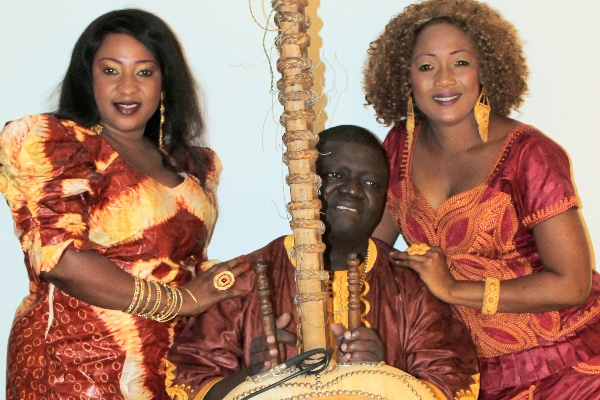
The main ethnic groups of the Gambia are: Mandinka, Fula, Wolof, Jola, Serer and Sarahuli, among others. Each of these groups has its own traditional music and dance forms associated to particular musical instruments. Gambian traditional music is closely attached to a caste, specifically the Griots - people who used to sing praise songs for kings and rulers of the kingdoms. They have always been the first musicians of the country and through this they have manufactured their music in a form of standard classical music. Griots - known in the local parlance as ‘Jalis’ in Mandinka, ‘Gewel’ in Wolof and ‘Gawlo’ in Fula - are praise singers and heralds of the court of ancient royalties and nobility in West Africa. In order words, they are a caste in Gambian society just like artisans, nobles and slaves. Their art is hereditary, although nowadays many people acquire their performance skills through creativity and are simply good singers or instrumentalists. Their trade has survived centuries and griots continue to be entertainers, historians, performers and repositories of genealogies. For example, the Mandinkas have the Jalis (oratorical folk storytellers) who also use the Kora lute and sing, as do other ethnic groups like the Gewel in Wolof who use the stringed Xalam. Some of these local musical instruments are made from local materials such as wood, hide, calabash gourds and horns.
When The Gambia became independent in the 1960s, the country’s musicians started using other instruments, such as western instruments, and incorporating it with local instruments, trying to carve a unique music perspective. It then became a folklore music, taking into account what they were singing were mostly under public domain. These griots would use their music and transform it into other areas, depending on each musician’s area of interest. As a result, the music began changing and the country witnessed the emergence of bands.
Some of the country’s legendary music icons in those days include Lalo Kebba Drammeh, Amadou Bansang Jobarteh (both kora players) and Momodou Suso, among others. Later on, new artists emerged, such as the celebrated king of kora Jaliba Kuyateh and his Kumareh band, Tata Dinding Jobarteh and Salam Band, and many others.
Sewruba
Sewruba is a popular traditional Mandinka dance which dates back to years. Sewruba is also a drum and refers to a particular Mandinka dance rhythm. Usually there are three drummers and one singer, then the entire crowd join in to dance to the tune. The drums are classified into three; namely, Kutirr-nding (short), Mbeleng (long) and Junkunrang/Kuturoba. Another instrument used by the Mandinkas is the Kora, a 21-string instrument that has a range of over three octaves, creating enchanting music that is multi-layered and melodic. It accompanies the Jalis who are praise singers (griots) of the Mandinka tribe[i].
Among the prolific performers who contributed immensely to popularise this traditional genre is Bakary Marong. He was born in Kiang Dumbuto in the Lower River Region, although his parents reportedly originated from Baddibu in the North Bank of the Gambia. He is regarded as one of the most famous performers of this genre of his generation.
Mbalax
Mbalax - also known as Ndagga, meaning ‘rhythm’ in Wolof - derives its name from the accompanying rhythms used in sabar, a tradition that originated from the Serer of the Kingdom of Sine and spread to the Kingdom of Saloum, where Wolof migrants took it to the Wolof kingdoms. This drum medley is accompanied by women singers and dancers. Wolof folk instruments include the xalam (or halam), which is a five-stringed lute that is very important in Wolof folk music; the sabar (aka sabarr, sabarro) drums, an ensemble of seven different drums, each differently tuned; and the hourglass talking drum called a tama.
However, the song in the medley include ordinary Wolof praise songs common in the Saloum area of the Gambia and farm work songs that are sung to exhort men to hard work on the farm despite the heat of the midday sun. It is reminiscent of Latin music combined with the Congolese rumba beat, which musicians from the Wolof tribe took and blended with the tama (talking drum), sabarr (djembe drum), electric guitar and vocals to create the Ndagga style. However, in most areas Wolof music was rhythmic rather than melodic. Players accompanied the highly energetic, predominantly monotone speech-song with the sabarro[ii]. Also ‘Wooye seet’ is a popular traditional Wolof bridal song in which the performer extols the virtues of the mother of the bride and exhorts the bride to be a good wife.
Nyamakala
Nyamakala is a popular traditional Fula dance. One of their famous instruments is called riti. This Fula fiddle is played like a violin to produce hauntingly melodious sounds. Among the top performers of this genre is Pullo Balde, born in Fulla Bantang in the Central River Region of the country. This incredible star was a Fula Gawlo, an itinerant performer who graced the occasions of his patrons accompanied by a band of Fula instrumentalists and dancers.
Molo Music
This is the traditional music among the Serahuli (aka Serahule or Sarahuli) community. The molo is a single-string lute played with a horsehair bow. It is reportedly the mother of string instruments in the West African sub-region. However, the rich musical heritage of the Serahuli encompasses their great skills in combining instruments of completely different genres to produce a harmony. Its players are expected to have diviners’ powers. This is why molo playing is related to divination and spiritualism. They also use local flutes (aerophone) and drums (membranophone) to accompany the traditional Serahuli dirges extolling manhood and religious piety. Also, djembe drums are the basic and most familiar instruments among all the ethnic groups including the Serahulis.
Bugarabu
Bugarabu is a Jola dance that is performed on several drums of various pitches, played all at once by a single drummer. The medley, according to many, embodies the spirit of joy and humour. While women clap their hands, sometimes amplified by clap sticks made from palm branches, dancers spring into the circle spontaneously. Among the top performers of this genre is Siaka Bojang, whose skill in playing the genre was legendary. In terms of instruments, the simbing is believed to be an earlier version of the kora used by the Jolas and may date back to the 13th century. It resembles the kora in shape but has a curved shaft and only six strings.
Njuup Ndagga
The Serer people are known especially for their vocal and rhythmic practices, which infuse their everyday language with complex overlapping cadences and their rituals with intense collaborative layering of voice and rhythm. Each motif has a purpose and is used for different occasions. Njuup is a traditional Serer dance and the progenitor of tassu (or tassou), used when chanting ancient religious verses. The griots of Senegambia still use it during marriages, naming ceremonies or when singing the praises of patrons. Among the most popular Serer medleys is ‘Jilor Sabar’, in which the richly beautiful sound of traditional instrument are apparent in addition to the guitar. The Serer guitar is heavily influenced by the Wolof mbalax rhythm, which gives the Serer guitar a unique spark that is different from the Western guitar tradition.
Currently, a number of emerging artists happily blend traditional instruments such as the riti, tama, kora and sabarr with modern instruments such as the electric guitar, organ, drum and bass to create unique melodies. Their musical approach has taken on a different dimension, transforming traditional genres and giving it a more widely appealing sound. In this way, the ancient traditions of Gambian music continue to survive today.
- Special thanks to Sheikh Omar Jallow, director of creative and performing arts at the Gambia National Centre For Arts & Culture (NCAC) for his insight into the topic.


Most popular
Call For Applications : ACCES seeks a UK-based performer
10 Sep 2026

Top amapiano songs of 2026
16 Feb 2026

Top Afrobeats songs of 2026
19 Mar 2026
Open call: Goethe-Institut grants for Southern African creatives
08 Sep 2026
AFRIMA 2026: All the winners
12 Jan 2026
Open call: Ernst von Siemens Music Foundation 2026 funding programmes
04 Sep 2026
Open call: FAME Week Africa, Pressure Cooker Studios songwriting camp
09 Sep 2026
Disclaimer: Music In Africa provides a platform for musicians and contributors to embed music and videos solely for promotional purposes. If any track or video embedded on this platform violates any copyrights please inform us immediately and we will take it down. Please read our Terms of Use for more.

Subscribe to our monthly Newsletter
Follow us on social media


Please log in to post a comment.